
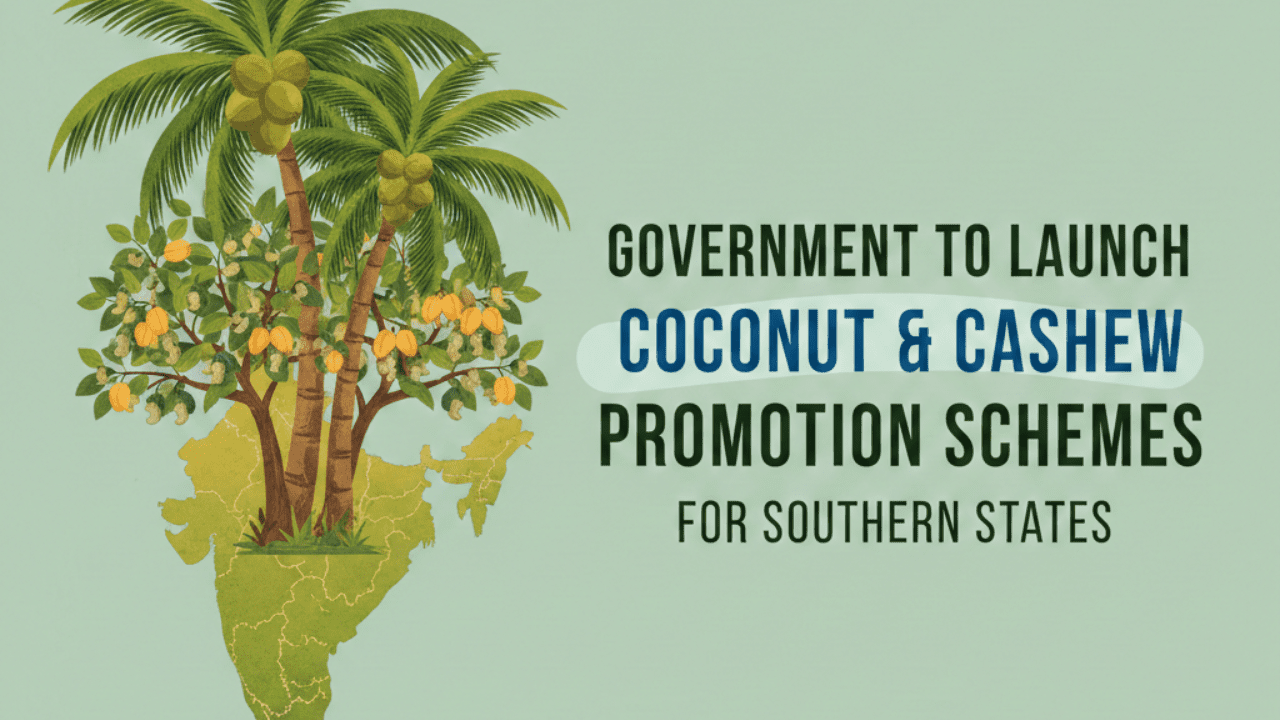
In a significant boost to India’s plantation sector, the Government of India has officially announced the launch of two major agricultural initiatives: the Coconut Promotion Scheme and a dedicated National Cashew & Cocoa Programme. Unveiled by Finance Minister Nirmala Sitharaman during the Union Budget 2026-27, these schemes are strategically tailored for the coastal and southern states of India, including Kerala, Karnataka, Tamil Nadu, and Andhra Pradesh. With an initial combined allocation of ₹350 crore for high-value plantation crops, the government aims to rejuvenate aging orchards, enhance productivity, and transform these traditional crops into premium global brands by 2030.
The initiative recognizes the immense economic weight of these crops; India is currently the world’s largest producer of coconuts, with nearly 30 million people—including 10 million farmers—dependent on the sector. By focusing on “rejuvenation and modernization,” the government is fulfilling its Kartavya (Duty) to double farmer incomes and ensure that the southern “Plantation Belt” becomes a primary engine for India’s agri-export ambitions.
The Coconut Promotion Scheme: Rejuvenating India’s Palm Groves
The cornerstone of the 2026 agricultural reforms is the Coconut Promotion Scheme, which targets the structural issues plaguing the sector—most notably the presence of “senile” or non-productive palms.
Key components of the scheme include:
- Large-Scale Rejuvenation: The government will provide financial assistance to replace old, low-yielding, and diseased coconut trees with high-yielding, early-bearing varieties. This is expected to significantly increase the per-hectare yield, which currently lags behind global competitors like Indonesia.
- Support for High-Yield Varieties: Distribution of quality planting material, including hybrid saplings that are resistant to common pests like the Root Wilt disease.
- Integrated Nutrient Management (INM): Incentivizing the use of organic fertilizers and micro-nutrients to improve soil health in coastal belts.
- Modernization through the Coconut Development Board (CDB): The CDB, headquartered in Kochi, will act as the primary nodal agency for the technical rollout, providing hands-on training to farmers in scientific management practices.
Strengthening the Cashew and Cocoa Value Chain
Alongside coconut, the government has proposed a dedicated program for Indian Cashew and Cocoa to achieve self-reliance in raw material production and processing. Despite being a major global exporter of processed cashew kernels, India still imports a significant volume of raw cashew nuts.
The new program aims to close this gap by:
- Expanding Cultivation: Bringing new areas under cashew cultivation in the southern and coastal regions, specifically targeting degraded lands.
- Processing Hubs: Establishing specialized processing clusters that utilize modern automated shelling and peeling technology to reduce wastage and improve hygiene standards.
- Branding and Export Competitiveness: A strategic push to transform Indian cashew and cocoa into “Premium Global Brands.” This includes securing Geographical Indication (GI) tags for specific regional varieties and improving packaging for direct retail in international markets.
- Cocoa Integration: Encouraging cocoa as an intercrop in coconut and arecanut gardens, providing farmers with an additional, high-value income stream from the same piece of land.
Digital Integration and AI-Powered Advisory
To ensure the success of these schemes, the government is integrating them with the Bharat-VISTAAR platform—a multilingual, AI-based agricultural advisory tool.
Through this digital link:
- Pest Alerts: Farmers will receive real-time notifications about pest outbreaks (such as the Rugose Spiralling Whitefly) and guidance on eco-friendly management.
- Market Linkages: Directly connecting Farmer Producer Organizations (FPOs) to global buyers and food processing industries, reducing the role of exploitative middlemen.
- Direct Benefit Transfer (DBT): All subsidies for saplings and infrastructure will be credited directly to the Aadhaar-linked bank accounts of the farmers, ensuring 100% transparency.
Conclusion: Empowering the Coastal Economy
The launch of the dedicated Coconut and Cashew Promotion Schemes marks a new chapter for the southern states. By prioritizing high-value plantation crops, the government is not only protecting the livelihoods of millions but is also positioning India as a global leader in quality and sustainability. These schemes are designed to ensure that the coastal regions contribute significantly to the Viksit Bharat 2047 vision, with “Made in India” coconut and cashew products becoming staples in kitchens worldwide.
As the replacement of aging trees begins in the upcoming planting season, the landscape of southern India is set for a green transformation. With the right mix of traditional wisdom and modern technology, the Indian farmer is now equipped to lead the global plantation economy with confidence and pride.