
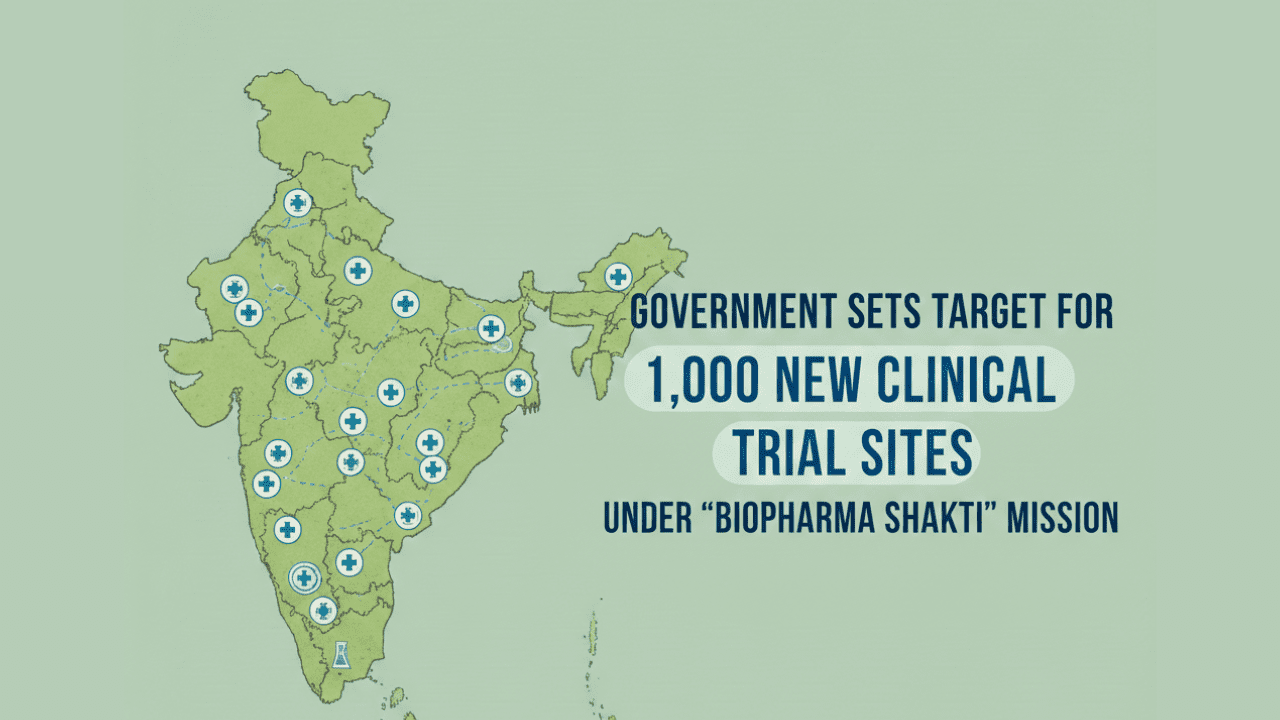
NEW DELHI – In a move to transition India from being the “pharmacy of the world” in generics to a global powerhouse in innovation, the Government of India has launched the BioPharma SHAKTI (Strategy for Healthcare Advancement through Knowledge, Technology, and Innovation) mission. A primary directive of this mission, notified in the Union Budget 2026-27, is the establishment of a network of 1,000 accredited clinical trial sites across the country. Backed by a financial outlay of ₹10,000 crore over the next five years, this initiative is designed to solve the structural fragmentation of India’s clinical research ecosystem. By decentralizing high-quality trial infrastructure into Tier-2 and Tier-3 cities, the government aims to accelerate the development of complex biologics and biosimilars, ensuring that India captures a 5% share of the global biopharmaceutical market by 2030.
The mission recognizes that clinical trials are the most significant bottleneck in bringing next-generation therapies to market. The creation of these 1,000 sites will provide a standardized, globally-aligned platform for domestic startups and multinational firms to validate life-saving treatments for non-communicable diseases (NCDs) like cancer, diabetes, and autoimmune disorders.
Decentralizing Research: The Tier-2 and Tier-3 Advantage
Historically, clinical research in India has been concentrated in a few metropolitan hubs, limiting the diversity of the participant pool and creating logistical hurdles. The BioPharma SHAKTI mission fundamentally changes this by spreading the 1,000 accredited sites across a wider geographic footprint.
Key Benefits of Decentralization:
- Diverse Patient Recruitment: Accessing a larger and more genetically diverse population in smaller cities improves the robustness of clinical data.
- Cost-Effectiveness: Operating sites in Tier-2 and Tier-3 locations is projected to reduce trial costs by 30-40% compared to metropolitan centers.
- Healthcare Infrastructure Boost: Each accredited site involves upgrading local hospital facilities, diagnostic labs, and storage units, thereby improving the general healthcare standard in these regions.
Strengthening the Regulatory Backbone: CDSCO Modernization
To ensure that these 1,000 sites produce data that is acceptable to global regulators like the US FDA and EMA, the mission includes a massive restructuring of the Central Drugs Standard Control Organisation (CDSCO).
- Scientific Review Cadre: The government is inducing a dedicated cadre of specialized scientists and technical personnel to handle the complex evaluation of biologics.
- Approval Timelines: The goal is to align Indian drug approval timeframes with international benchmarks, aiming for a “Single Window” electronic clearance system for clinical trial applications.
- Global Accreditation: Every new site will be mandated to follow a unified “Accreditation Standard” that ensures ethical conduct, data integrity, and patient safety, positioning India as a “Trusted Destination” for global research.
Strategic Impact: From Generics to Biologics
The BioPharma SHAKTI mission is a strategic pivot to address the shifting global disease burden. As patents for blockbuster biologic drugs worth billions of dollars expire over the next decade (the “patent cliff”), India is positioning itself to lead the biosimilar revolution.
Focus Areas under SHAKTI:
- Biologics for NCDs: Targeting affordable access to advanced therapies for cancer, diabetes, and rheumatoid arthritis.
- Indigenous Vaccines: Building on the success of COVID-19, the network will support trials for new vaccines against HPV, Dengue, and Chikungunya.
- Biosimilar Competitive Edge: Lowering the domestic cost of production for biosimilars by 30-50%, making life-saving treatments accessible to the common man.
Conclusion: A ‘Watershed Moment’ for Life Sciences
The establishment of 1,000 accredited clinical trial sites is the most significant infrastructure push in the history of the Indian pharmaceutical sector. By linking manufacturing scale, skilled human resources (through the expansion of NIPERs), and clinical research capacity, the government is ensuring that the ‘Reform Express’ powers a new era of innovation.
As these sites become operational, India will no longer just be the world’s factory for pills; it will be the world’s laboratory for cures. In the journey toward Viksit Bharat 2047, the BioPharma SHAKTI mission ensures that Indian science leads the way in global health, fulfilling the Kartavya (Duty) of making advanced medicine both affordable and available to all.